11.20.2010

Wired Kanji - Lesson 4

Wired Kanji - Lesson 4

Dialogue:


すみません。マクドナルドはどこですか。あのデパートの前ですよ。ありがとうございます。


ただいま。おかえりなさい。映画はどうでしたか。見ませんでした。彼は来ませんでした。えっ、どうしてですか。わかりません。だから、一人で本屋とお寺に行きました。人がたくさんいましたか。はい。お寺で写真をたくさん撮りました。デパートにも行きました。お土産てす。ありがとうございます。あっ、メアリーさん、さっき電話がありましたよ。


今日来ませんでしたね。行きましたよ。ハーゲンダッツの前で一時間待ちました。えっ。ハーゲンダッツじゃありませんよ。マクドナルドですよ。マクドナルド… ごめなさい!


あのデパートの前ですよ。

あの デパート の まえ です よ。

In front of that department store over there.


 ー まえ ー in front


映画はどうでしたか。

えいが は どう でした か。

How was the movie?


映画 ー えいが ー movie


見ませんでした。

みません でした。

I didn't see it.


見ませんでした ー みませんでした ー didn't see


彼は来ませんでした。

かれ は きません でした。

He didn't come.


 ー かれ ー He

来ませんでした ー きませんでした ー didn't come


一人で本屋とお寺に行きました。

ひとり で ほんや と おてら に いきました。

I went to a book shop and a temple by myself.


一人 ー ひとり ー Alone

本屋 ー ほんや ー Book shop

お寺 ー おてら ー Temple

行きました ー いきました ー Went


人がたくさんいましたか。

ひと が たくさん いました か。

Were there many people there?


 ー ひと ー People


お寺で写真をたくさん撮りました。

おてら で しゃしん を たくさん とりました。

At the temple I took many photographs.


お寺 ー おてら ー Temple

写真 ー しゃしん ー Photograph

撮りました ー とりました ー Took


デパートにも行きました。

デパーと に も いきました。

I also went to the department store.


行きました ー いきました ー Went


お土産です。

おみやげ です。

Here's a souvenir.


お土産 ー おみやげ ー souvenir


さっき電話がありましたよ。

さっき でんわ が ありました よ。

A while ago, there was a phone call for you.


電話 ー でんわ ー Telephone


今日来ませんでしたね。

きょう きません でした ね。

Today, you didn't come did you.


今日 ー きょう ー Today

来ませんでした ー きませんでした ー Didn't come


ハーゲンダッツの前で一時間待ちました。

ハーゲンダッツ の まえ で いちじ かん まちました。

I waited in front of Haagen-Dazs for an hour.


 ー まえ ー in front

一時間 ー いちじかん ー For 1 hour

待ちました ー まちました ー Waited


Review:


 ー まえ ー in front

映画 ー えいが ー movie

見ませんでした ー みませんでした ー didn't see

来ませんでした ー きませんでした ー didn't come

一人 ー ひとり ー alone

本屋 ー ほんや ー Book shop

お寺 ー おてら ー Temple

行きました ー いきました ー went

 ー ひと ー People

お寺 ー おてら ー Temple

写真 ー しゃしん ー Photograph

撮りました ー とりました ー took

行きました ー いきました ー went

電話 ー でんわ ー Telephone

お土産 ー おみやげ ー Gift

今日 ー きょう ー Today

 ー かれ ー He

来ませんでした ー きませんでした ー didn't come

 ー まえ ー in front

一時間 ー いちじかん ー for 1 hour

待ちました ー まちました ー waited

For a more interactive experience, try this lesson on Smart.fm.

Looking for more Kanji lessons?
Try the other Wired Kanji lessons

Still working on Hiragana/Katakana?

11.16.2010

Wired Kana - Blank Japanese Practice Sheets

Wired Kana - Blank Japanese Practice Sheets

Download the
Blank Japanese practice sheets (49kb pdf)

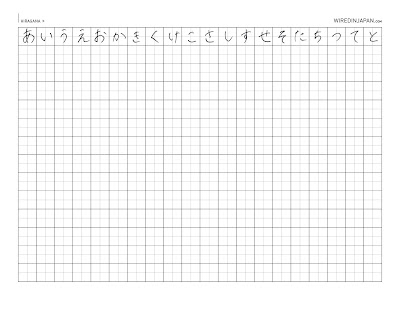
A great way to test your ability to recall Hiragana and Katakana from memory, is to try writing the characters without any images for reference. If you're able to completely write the alphabets by hand, you'll be able to read them when you come across Hiragana or Katakana in Japanese writing.

Try using this blank Japanese practice sheet to test your memory. It's best to write out all of characters in order and when you come to a character that you can't remember, skip it and move on to the next one. When you finish the entire alphabet, you can see which characters you systematically forget.

It has been a long time since I've needed to practice Hiragana and Katakana. I've done so many of these sheets that there is no way I'll ever forget these characters. To read about my earlier experiences while learning Hiragana and Katakana, take a look at this old post: Think you know your Kana?

Wired Kana - Blank Japanese Practice Sheets

Download the
Blank Japanese practice sheets (49kb pdf)

If your not at this level yet, be sure to use these Hiragana and Katakana practice sheets. Or, if you think Kana are too basic, try Wired Kanji lesson 1.

11.10.2010

Wired Kana - Hiragana and Katakana Practice Sheets


Learning Hiragana and Katakana, the Japanese alphabets, really helped me while navigating Japan and now that I'm trying to learn to read Japanese, they're helping me to understand Kanji. The sooner I was able to stop using romaji, and switch to writing Japanese in Hiragana and Katakana, the more Japanese I was able to understand and read.

To practice Hiragana and Katakana, my Japanese tutor, Rio Sensei, suggested I use practice sheets and write the characters over and over again. After all that practice, there's no way I'll ever forget a character.

Download:
Hiragana and Katakana Practice Sheets
(300kb PDF)
Hiragana and Katakana Practice Sheets
Or get them on the Wired in Japan Flickr.

The handwriting was generously drafted by a native hand, good friend and graphic designer, Yuka Nishino.

10.19.2010

Wired Kanji - Lesson 3

Dialogue:


週末はたいてい何をしますか。そうですね。たいていうちで勉強します。でも、ときどき映画を見ます。そうですか。じゃあ、土曜日に映画を見ませんか。土曜日はちょっと… じゃあ、日曜日はどうですか。いいですね。


おはようございます。おはよう。早いですね。ええ、今日は京都に行きます。京都で映画を見ます。いいですね。何時ごろ帰りますか。九時ごろです。晩ごはんは?食べません。そうですか。じゃあ、いってらっしゃい。いってきます。


週末はたいてい何をしますか。

しゅうまつ は たいてい なに を します か。

What do you normally do on the weekend?


週末 ー しゅうまつ ー Weekend

 ー なに ー What


たいていうちで勉強します。

たいてい うち で べんきょうします。

I usually study at home.


勉強します ー べんきょうします ー Study


ときどき映画を見ます。

ときどき えいが を みます。

Sometimes I watch movies.


映画 ー えいが ー Movie

見ます ー みます ー Watch


土曜日に映画を見ませんか。

どようび に えいが を みません か。

You wouldn't like to see a movie on Saturday, would you?


土曜日 ー どようび ー Saturday

映画 ー えいが ー Movie

見ません ー みません ー Don't watch


土曜日はちょっと…

どようび は ちょっと...

Saturday is a little difficult.


土曜日 ー どようび ー Saturday


日曜日はどうですか。

にちようび は どう です か。

How is Sunday?


日曜日 ー にちようび ー Sunday


早いですね。

はいやい です ね。

You're up early, aren't you.


早い ー はやい ー Quick, early


今日は京都に行きます。

きょう は きょうと に いきます。

Today, I'm going to Kyoto.


今日 ー きょう ー Today

京都 ー きょうと ー Kyoto

行きます ー いきます ー Go


京都で映画を見ます。

きょうと で えいが を みます。

In Kyoto, I'll watch a movie.


京都 ー きょうと ー Kyoto

映画 ー えいが ー Movie

見ます ー みます ー Watch


何時ごろ帰りますか。

なんじ ごろ かえります か。

What time will you come home?


何時 ー なんじ ー What time

帰ります ー かえります ー Return


九時ごろです。

くじ ごろ です。

Around 9:00.


九時 ー くじ ー 9:00


晩ごはんは?

ばんごはん は?

What about dinner?


晩ごはん ー ばんごはん ー Dinner


食べません。

たべません。

I won't be eating.


食べません ー たべません ー Wont eat


Review:


週末 ー しゅうまつ ー Weekend

 ー なに ー What

勉強します ー べんきょうします ー Study

映画 ー えいが ー Movie

見ます ー みます ー Watch

土曜日 ー どようび ー Saturday

映画 ー えいが ー Movie

見ません ー みません ー Don't watch

土曜日 ー どようび ー Saturday

日曜日 ー にちようび ー Sunday

早い ー はやい ー Quick, early

今日 ー きょう ー Today

京都 ー きょうと ー Kyoto

行きます ー いきます ー Go

京都 ー きょうと ー Kyoto

映画 ー えいが ー Movie

見ます ー みます ー Watch

何時 ー なんじ ー What time

帰ります ー かえります ー Return

九時 ー くじ ー 9:00

晩ごはん ー ばんごはん ー Dinner

食べません ー たべません ー Wont eat


For a more interactive experience, try this lesson on Smart.fm.


Other lessons in the Wired Kanji series:

Lesson 1

Lesson 2


10.15.2010

Wired Kanji - Lesson 2

Continuing with my kanji studies, here are some more basic Japanese dialogues. To learn more about they way I'm studying kanji and some extra practice, see Lesson 1.


Lesson 2


Dialogue:


すみません。これはいくらですか。それは三千円です。高いですね。じゃあ、あの時計はいくらでか。あれは三千五百円です。そうですか。あれも高いです。これは千八百円ですよ。じゃあ、その時計をください。


これは誰の財布ですか。私の財布です。ありがとうございます。


いらっしゃいませ。メニューをどうぞ。どうも。これは何ですか。どれですか。ああ、トンカツです。トンカツ?魚ですか。いいえ、魚じゃありません。肉です。美味しいですよ。じゃあ、これをお願いします。


すみません、お手洗いはどこですか。あそこです。


それは三千円です。

それ は さんぜん えん です。

This is 3,000 yen.


三千 ー さんぜん ー 3,000

 ー えん ー Yen


高いですね。

たかい です ね。

Expensive, isn't it?


高い ー たかい ー Expensive


あの時計はいくらでか。

あの とけい は いくら です か。

How much is that watch?


時計 ー とけい ー Watch


あれは三千五百円です。

あれ は さんぜん ごひゃく えん です。

That's 3,500 yen.


三千 ー さんぜん ー 3,000

五百 ー ごひゃく ー 500

 ー えん ー Yen


あれも高いです。

あれ も たかい です。

That's also expensive.


高い ー たかい ー Expensive


これは千八百円ですよ。

これ は せん はっぴゃく えん です よ。

This is 1,800 yen.


 ー せん ー 1,000

八百 ー はっぴゃく ー 800

 ー えん ー Yen


これは誰の財布ですか。

これ は だれ の さいふ です か。

Who's wallet is this?


 ー だれ ー Who?

財布 ー さいふ ー Wallet


私の財布です。

わたし の さいふ です。

It's my wallet.


 ー わたし ー My

財布 ー さいふ ー Wallet


これは何ですか。

これ は なん です か。

What is this?


 ー なん ー What?


魚です。

さかな です。

It's fish.


 ー さかな ー Fish


肉です。

にく です。

It's meat.


 ー にく ー Meat


美味しいですよ。

おいしい です よ。

It's delicious!


美味しい ー おいしい ー Delicious


これをお願いします。

これ を おねがいします。

I'll have this please.


お願いします ー おねがいします ー Please (polite)


お手洗いはどこですか。

おてあらい は どこ です か。

Where is the washroom?


お手洗い ー おてあらい ー Washroom


Review:


三千 ー さんぜん ー 3,000

 ー えん ー Yen

高い ー たかい ー Expensive

時計 ー とけい ー Watch

三千 ー さんぜん ー 3,000

五百 ー ごひゃく ー 500

 ー えん ー Yen

高い ー たかい ー Expensive

 ー せん ー 1,000

八百 ー はっぴゃく ー 800

 ー えん ー Yen

 ー だれ ー Who?

財布 ー さいふ ー Wallet

 ー わたし ー My

財布 ー さいふ ー Wallet

 ー なん ー What?

 ー さかな ー Fish

 ー にく ー Meat

美味しい ー おいしい ー Delicious

お願いします ー おねがいします ー Please (polite)

お手洗い ー おてあらい ー Washroom


For a more interactive experience, try this lesson on Smart.fm.


Other lessons in the Wired Kanji series:

Lesson 1

Lesson 3

10.14.2010

Wired Kanji - Lesson 1

I have been having difficulty learning kanji, as I wrote in my previous post, but this time I have a solution. I want to learn kanji not as isolated characters, but rather how I might see them in a sentence; my goal is to learn how to read. Adam Rotmil suggested that I use paragraphs and dialogues to practice learning kanji in context.


My strategy:

Below is a Japanese dialogue that I am using to learn kanji. I know all the vocabulary, but I don't know any of their kanji. I start with the raw dialogue and read through it the best I can. I usually don't know them all. I then extract the sentences with kanji and subtitle them in hiragana. After, I focus on entire words using kanji, notated with hiragana and given an English translation; NO ROMAJI. And finally, I review the entire list of words used. For more practice, I created a lesson on Smart.fm. Kanji Focus Mode really makes a difference.


Notice that sometimes vocabulary items are repeated. I figure the more they are used, the more frequent I'll see them while reading.


Lesson 1


Dialogue:


すみません。今何時ですか。十二時半です。ありがとうございます。いいえ。


あの、留学生ですか。ええ、アリゾナ大学の学生です。そうですか。専門は何ですか。日本語です。今二年生です。


今何時ですか。

いま なんじ です か。

What time is it now?


 ー いま ー Now

何時 ー なんじ ー What time?


十二時半です。

じゅうにじ はん です。

It's 12:30.


十二時 ー じゅうにじ ー 12:00

 ー はん ー Half


留学生ですか。

りゅうがくせい です か。

Are you an international student?


留学生 ー りゅうがくせい ー International Student


アリゾナ大学の学生です。

アリゾナ だいがく の がくせい です。

I'm a student of Arizona University.


大学 ー だいがく ー College

学生 ー がくせい ー Student


専門は何ですか。

せんもん は なん です か。

What's your speciality?


専門 ー せんもん ー Speciality

 ー なん ー What?


日本語です。

にほんご です。

It's Japanese.


日本語 ー にほんご ー Japanese (Language)


今二年生です。

いま にねんせい です。

Now, I'm a sophomore.


 ー いま ー Now

二年生 ー にねんせい ー Sophmore


Review:


 ー いま ー Now

何時 ー なんじ ー What time?

十二時 ー じゅうにじ ー 12:00

 ー はん ー Half

留学生 ー りゅうがくせい ー International Student

大学 ー だいがく ー College

学生 ー がくせい ー Student

専門 ー せんもん ー Speciality

 ー なん ー What?

日本語 ー にほんご ー Japanese (Language)

 ー いま ー Now

二年生 ー にねんせい ー Sophmore


For a more interactive experience, try this lesson on Smart.fm.

Other lessons in the Wired Kanji series:

10.09.2010

My Problem with Learning Kanji


I want to learn kanji. I've already tried and failed a few times. But this time, I know I can do it.

I have a friend taking a Japanese class right now and it frustrates me to see how quickly she's able to pick up kanji. She'll be reading over some Japanese and say, "Oh, I know this one. It means...". Sure, I know the word when she says it, but I could never pull the character out of a sentence.

My problem:
Learning kanji is boring and putting it in use is a challenge.

I find the traditional way of learning kanji, a massive stack a flash cards with a single kanji on each, to be daunting at the very least. This seems strange to me because a single kanji has numerous readings and a multitude of related meanings.

My solution:
Learn kanji, not by the character itself, but by the words that they are used in. To see this in action, view Wired Kanji - Lesson 1.

I am able to have a basic conversation in Japanese and have a large enough vocabulary (with the help of a dictionary) to convey my thoughts through writing (with the help of a computer). I know all these words, their sounds and their meanings, yet I don't know the kanji that represents them.

Working with the words I already know, I can learn their kanji how they appear in a sentence.

For example:
私は新しい雑誌を読んでいます
わたし は あたらしい ざっし を よんでいます。
I am reading a new magazine.

I would learn the kanji for:
私 - わたし (I)
新しい - あたらしい (new)
雑誌 - ざっし (magazine)
読んでいます - よんでいます (reading)

Notice that each vocabulary item has a specific meaning. Some might be a single kanji, others might be multi-kanji pairs or a mix of kanji and hiragana. Yet, this is exactly how I would see them while reading.

I don't think there is a specific tool for learning kanji this way but I could use a list of the most common words used in Japanese writing. I also started a list of all the words I knew in Japanese, when I first began learning and it contains many basic words and phrases (when I went to Japan, I couldn't keep up). And as another tool, I purchased a handful of children's books written in Japanese from Book Off, that are written in kanji with furigana (notation in hiragana).

This is the best strategy, for me. This time, I will learn kanji.